The Complete Beginner Grappler’s Blueprint
Everything a beginner needs to start, thrive, and succeed in Brazilian Jiu-Jitsu. Complete guides, checklists, and insider tips for your BJJ journey.
📚 Jump to Section
Essential Gear Checklist
Start with basics. You don’t need everything on day one—build your collection as you commit to training.
Phase 1: Your First Classes (Minimal Investment)
Comfortable Athletic Clothing
Fitted t-shirt and athletic shorts (no zippers, pockets, or buttons). Most gyms let beginners train in gym clothes for the first few sessions.
Water Bottle
Bring a large reusable water bottle (32oz+). Staying hydrated is critical during intense training. Check price ranges: $15–$30.
Flip-Flops or Sandals
Wear these when moving off the mats to maintain gym hygiene. Keep them clean and bring them to every class. Around $15–$25.
Phase 2: After Week 1–2 (Committed Investment)
BJJ Gi (Traditional Uniform)
The kimono-style uniform for gi training. Look for Pearl Weave gis (350–450 GSM) that are IBJJF-approved. Most gyms sell or recommend specific brands.
$80–$250 Browse Quality GisRash Guard (Under Gi or No-Gi)
Fitted compression shirt that prevents mat burn and rashes. Essential for both gi and no-gi training. Reinforced seams are important.
$25–$60 Browse Quality RashggardsMouthguard
Protect your teeth and jaw. Start with a boil-and-bite guard ($20), or invest in custom-molded ($50–$150) after a few weeks. Non-negotiable for rolling.
$20–$150Gym Bag with Separate Compartments
Keep sweaty gi separate from clean clothes. Ventilation pockets prevent mildew and odor. Look for BJJ-specific bags.
$30–$80 Browse Quality BJJ BagsPhase 3: Optimization (Long-Term Training)
Second Gi
Once your first gi is in the wash, training can’t happen. A second gi ensures you train 3–4x per week without waiting for laundry.
$80–$250Grappling Shorts & Spats (No-Gi)
Tight-fitting shorts (no zippers) and full-leg spats. Prevents fabric from being grabbed and provides compression support.
$25–$60 Browse Quality Grappling ShortsAthletic Tape & Finger Tape
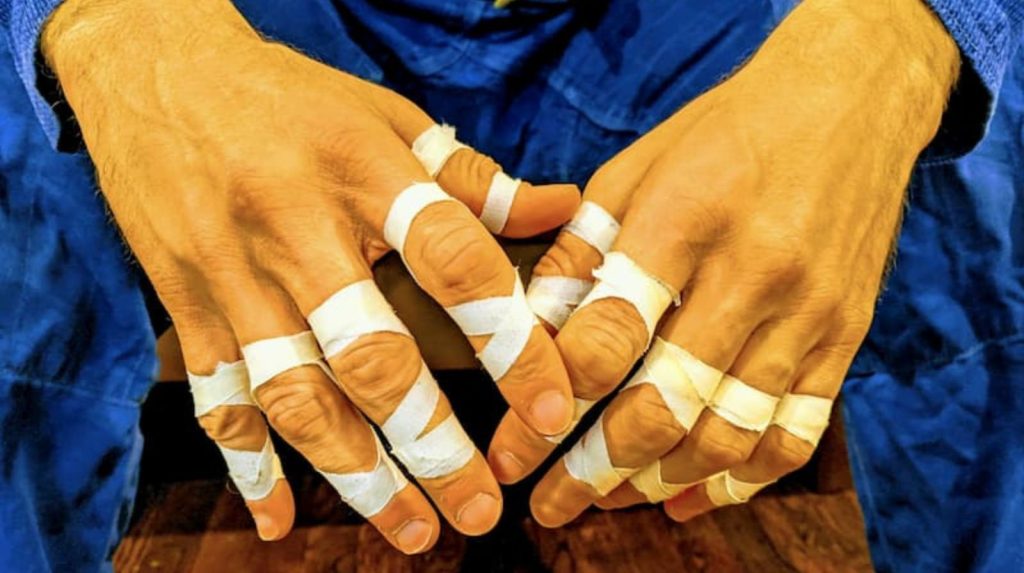
Prevents finger injuries and joint strain. Especially useful if your gym wrestles hard. Keep a roll in your gym bag.
$5–$15 Browse Quality BJJ Finger TapesKnee Pads & Elbow Pads (Optional)
Protect joints from mat burn and impact. Useful for wrestlers or those with joint sensitivities. Most beginners skip these initially.
$20–$50 Browse Quality BJJ Knee PadsHygiene & Recovery Essentials
Shower Supplies & Deodorant
Always shower after training to prevent skin infections. Bring a small towel, soap, and deodorant to the gym.
Nail Clippers
Keep nails trimmed short before every class to avoid injuring training partners. This is a respect issue.
Anti-Fungal Spray (Matmat Prevention)
Mats can harbor bacteria and fungi. Spray feet and body after training to prevent ringworm, staph, and other skin infections.
Core Fundamentals Every Beginner Must Know
Master these foundational positions and techniques before advancing to complex submissions.
The Basic Positions
Mount Position
You’re on top, straddling your opponent’s chest. Recognized as one of the most dominant positions in BJJ.
Guard Position
You’re on your back with your legs wrapped around your opponent. Strong defensive position with numerous attacking options.
Side Control
You’re perpendicular to your opponent on top. Excellent for control and submissions.
Knee on Belly
Advanced control position with your knee on the opponent’s midsection. Creates significant pressure and discomfort.
What to Expect in Your First Class
Understanding class structure helps you prepare mentally and physically.
Warmup (10-15 minutes)
Expect light cardio, stretching, and BJJ-specific movements. Your coach may have you do shrimp drills, forward rolls, or technical warmup movements.
Technique Instruction (20-30 minutes)
Your instructor demonstrates a technique step-by-step. Ask questions—no question is stupid when you’re learning.
Drilling (15-20 minutes)
Practice the technique with a partner, typically with resistance but without full sparring intensity.
Live Rolling/Sparring (15-30 minutes)
Free-form grappling with resisting opponents. This is where you apply what you learned and test your skills.
Cool Down (5-10 minutes)
Stretching and cool-down period to ease your body back to normal heart rate.
7 Critical Mistakes Beginners Make
Avoid these pitfalls to accelerate your progress and stay injury-free.
❌ Going Too Hard Too Soon
Many beginners treat every roll like a competition. This leads to injuries and burnout. Roll at 60-70% intensity while learning.
❌ Neglecting Fundamentals
Fancy techniques won’t save you. Master basic positions, escapes, and control before learning complex submissions.
❌ Poor Hygiene
Skin infections, staph, and ringworm are common in BJJ. Shower immediately after training, wash your gi regularly, and keep your nails trimmed.
❌ Ego Over Wisdom
Check your ego at the door. You will be tapped by people smaller than you. Accept it, learn from it, move on.
❌ Skipping Stretching
Flexibility prevents injuries and improves your range of motion. Dedicate 10 minutes daily to stretching your hips, hamstrings, and shoulders.
❌ Not Asking Questions
Your coach expects questions. Confusion is normal—clear it up immediately to avoid developing bad habits.
❌ Irregular Training
Consistency beats intensity. Three times per week is better than once a week with longer sessions. Make it a habit.
Developing a Champion’s Mindset
BJJ is as much mental as it is physical. Build the mindset that will carry you through plateaus and challenges.
Remember: Every black belt was once a white belt who refused to quit. Your progress is non-linear. You will have bad days, plateaus, and moments of doubt. This is normal and part of the journey.
Key Mental Principles
- Embrace the Struggle: Discomfort is growth. When a position feels difficult, you’re learning.
- Focus on Process, Not Results: Show up, train hard, stay humble. Results follow.
- Learn from Every Roll: Win or lose, extract lessons. Ask training partners what you did well and what to improve.
- Celebrate Small Wins: Landing a new technique is progress. Acknowledge it and build on it.
- Build Community: BJJ is a team sport. Support your training partners. Train with people better than you.
Your BJJ Progress Timeline
Here’s a realistic breakdown of what to expect as you progress through the ranks.
Months 1-3: Foundation
You’re learning basic positions and movements. Your body will be sore. You’ll be tapped frequently. Focus on not panicking and learning proper escape mechanics.
Months 4-6: Consistency Pays Off
Movements start feeling more natural. You can chain techniques together. You’re beginning to understand position hierarchy and timing.
Months 7-12: Technical Growth
You’re recognizing patterns mid-roll. You can catch submissions but may still be erratic. You’re ready for your first promotion to blue belt.
1-2 Years: Developing Style
You have a game. You understand your strengths and weaknesses. You’re mentoring newer students and handling higher belts with skill and respect.
The “White Belt Survival” Masterclass
Don’t just “show up” and hope for the best. Get a proven 7-day roadmap delivered straight to your inbox. Master the basics, save money on gear, and survive your first month.
What’s Inside The Sequence:
- Day 1: The truth about “getting fit” before starting
- Day 2: The Smart Gear Guide (Stop wasting $$ on bad gis)
- Day 3: The “White Belt Superpower” Mindset Shift
- Day 4: The only 4 positions you actually need
- Day 7: PLUS: The 30-Page Beginner Blueprint PDF