Essential Kettlebell Workouts for BJJ
Build a grappling-proof body with these 6 essential movements. Improve grip strength, posterior chain power, and core stability without the joint stress of heavy barbells.
Want to take your workouts to the next level? You now have a new best friend: kettlebells. According to an ACE study, a 20-minute kettlebell workout can burn calories at a pace equivalent to running a 6-minute mile—without the high-impact joint stress of running.
Brazilian Jiu-Jitsu pushes your mind and body to their limits. However, data shows that nearly 66% of combat sports injuries are preventable with proper strength and conditioning, particularly in the shoulders and knees.
Why Kettlebells? The offset center of mass mimics the unpredictable nature of grappling an opponent. Unlike a balanced barbell, a kettlebell fights you back, forcing your stabilizer muscles to work overtime—just like in a live roll.
The 6 Essential Kettlebell Workouts for BJJ
 Hip Power
Grip Stamina
Hip Power
Grip Stamina
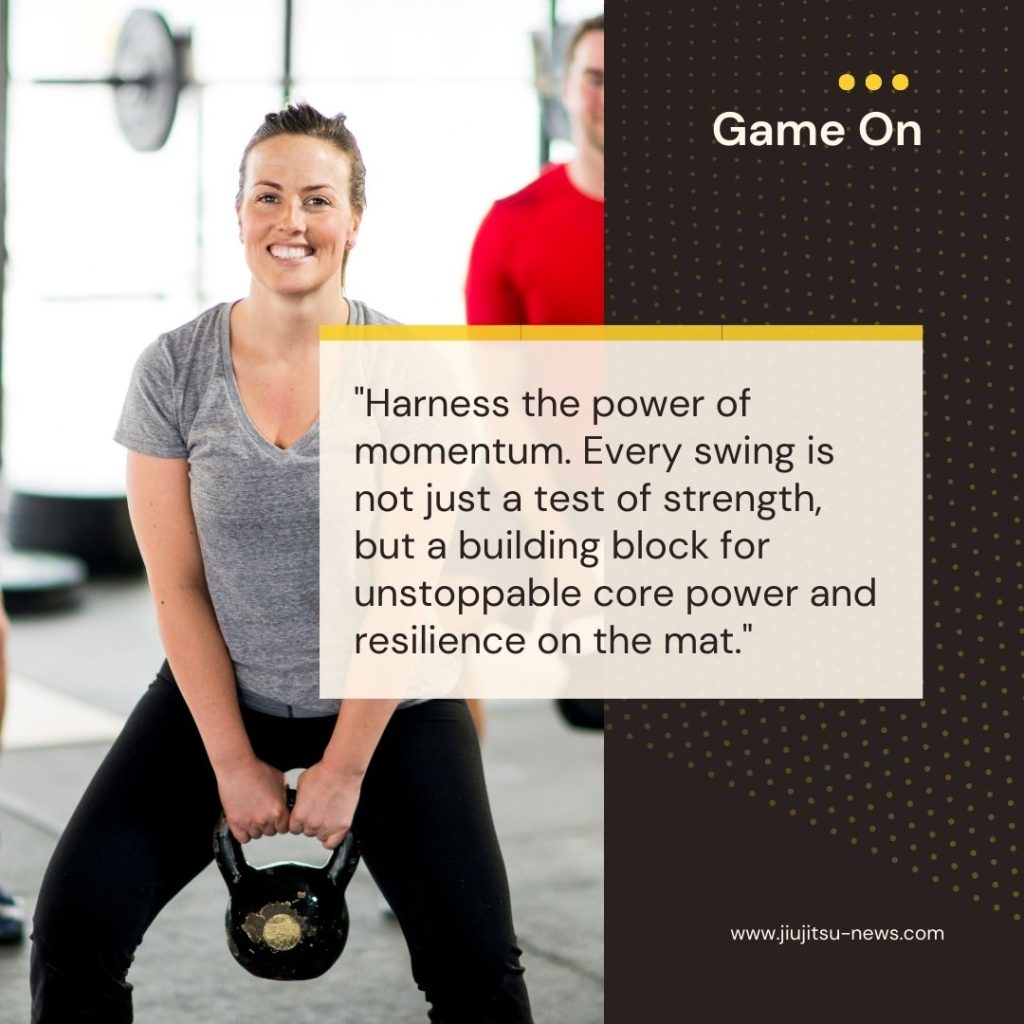
1. Kettlebell Swing
Why It’s Essential: The swing is a dynamic hip hinge that mimics the explosive power needed for bridging out of mount or shooting for a double leg. Studies show that swings produce glute activation levels comparable to heavy deadlifts but with significantly less shear force on the lumbar spine.
Grappling Transfer: Develops the “What the Hell Effect”—anaerobic conditioning that allows you to explode late in the round when your opponent is tired.
 Base Strength
Spinal Health
Base Strength
Spinal Health
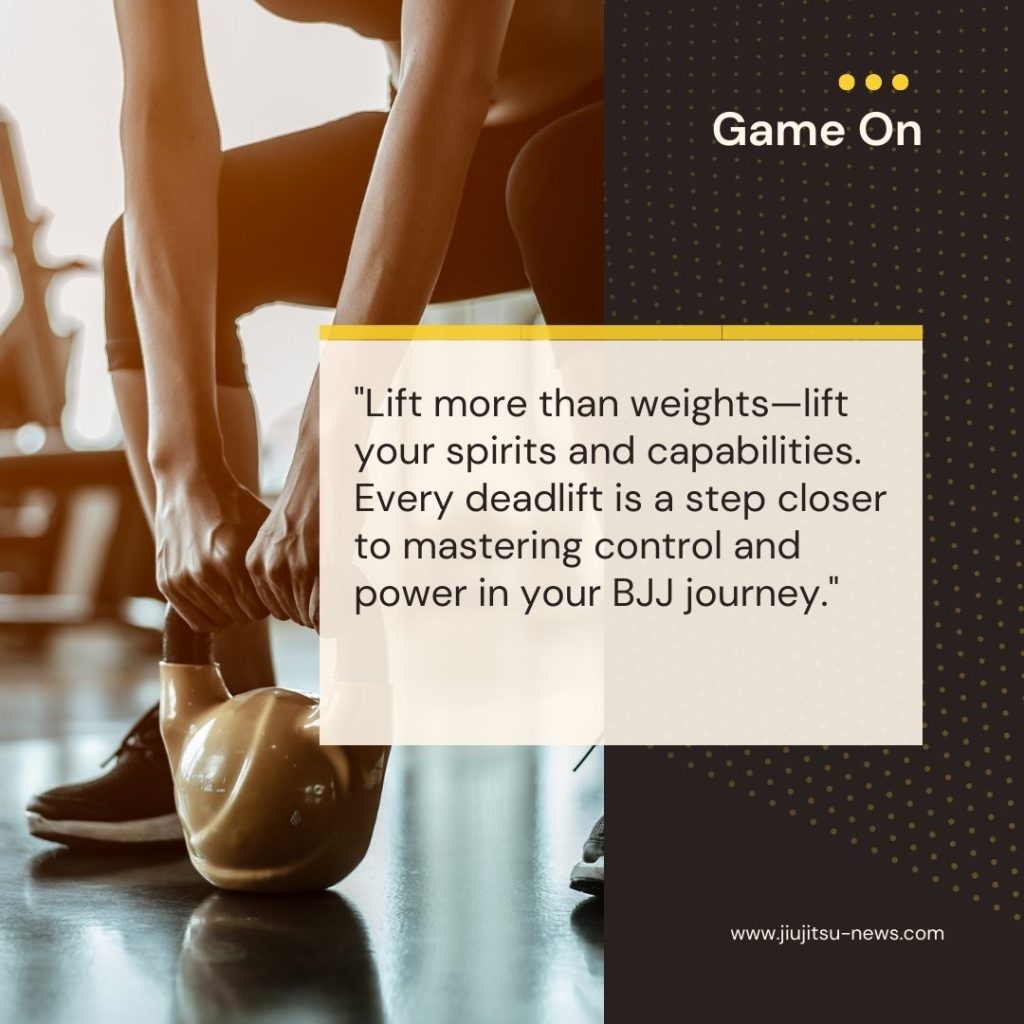
2. Kettlebell Deadlift
Why It’s Essential: Before you swing, you must deadlift. This movement teaches you to maintain a “neutral spine” under load—the exact mechanic used to stop someone from breaking your posture in their closed guard.
Grappling Transfer: A strong posterior chain (lower back, glutes, hamstrings) is your first line of defense against being stacked or folded.
 Leg Drive
Posture Correction
Leg Drive
Posture Correction
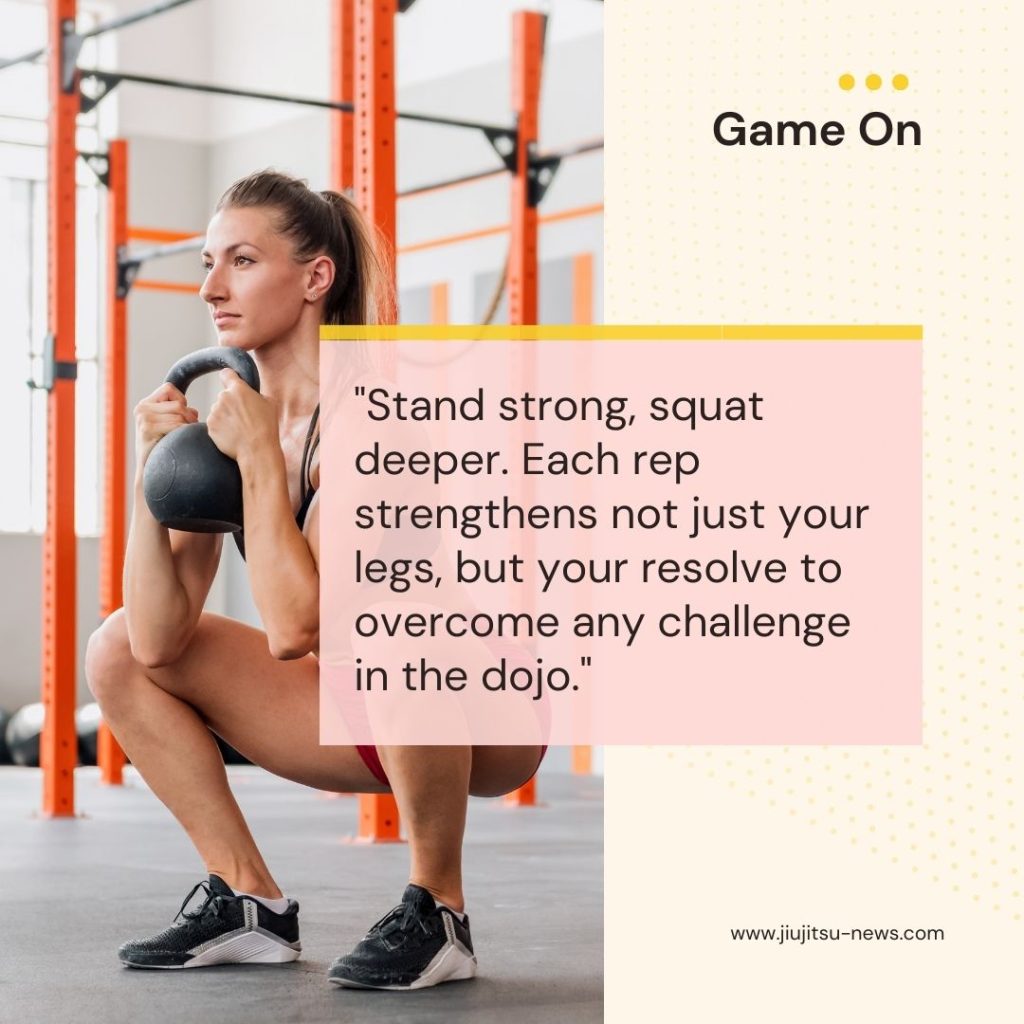
3. Goblet Squat
Why It’s Essential: By holding the weight in front of your chest, your core must work double-time to prevent you from falling forward. This specifically targets thoracic extension—helping to fix the “hunched” posture many BJJ players develop.
Grappling Transfer: Builds the leg drive necessary for finishing takedowns and standing up from bottom position against resistance.
 Shoulder Stability
Full Body Control
Shoulder Stability
Full Body Control
4. Turkish Get-Up (TGU)
The Ultimate BJJ Exercise: If you only do one exercise, make it this one. The TGU is essentially a “Technical Stand-Up” under load. It connects your left hand to your right foot (cross-body stabilization), which is exactly how you generate power when sweeping an opponent.
Grappling Transfer: Bulletproofs your shoulders against Kimuras and Americanas by forcing the rotator cuff to stabilize through a wide range of motion.
 Pulling Power
Anti-Rotation
Pulling Power
Anti-Rotation
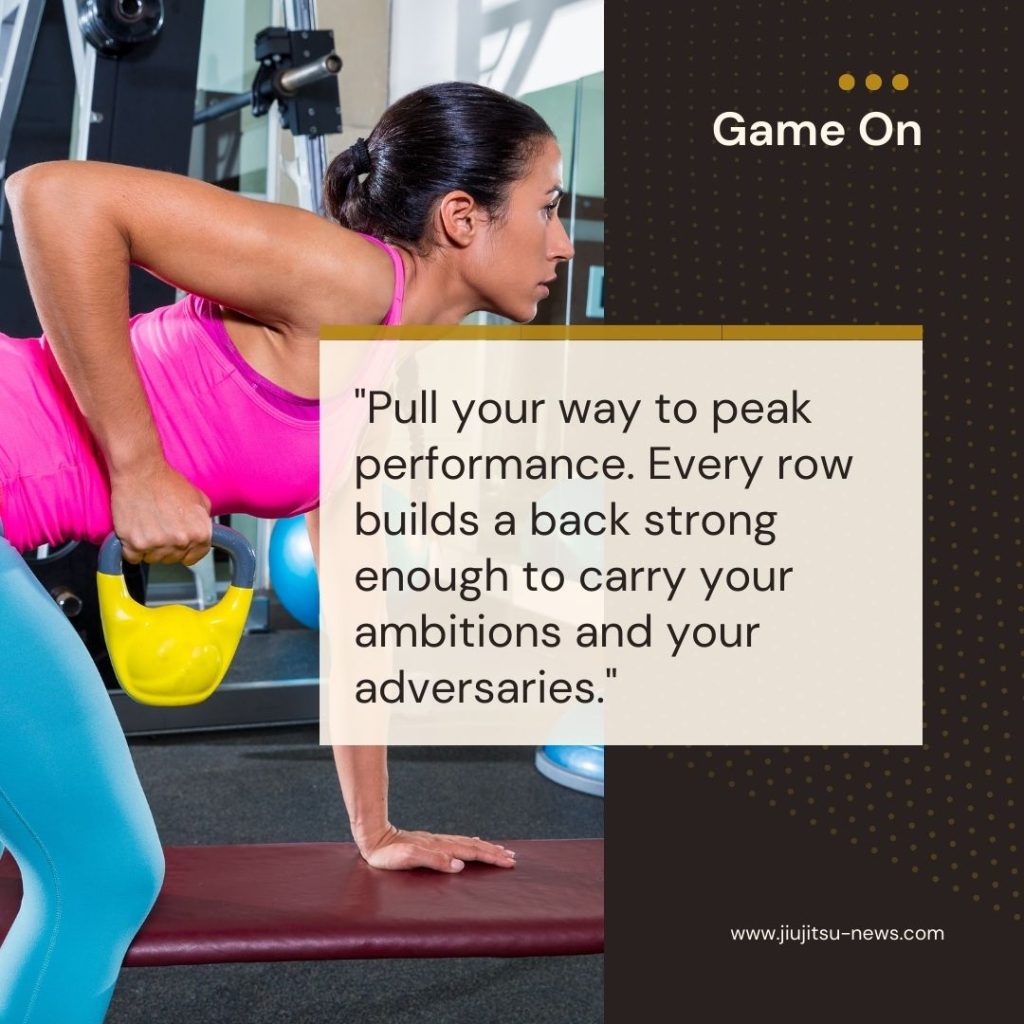
5. Kettlebell Row
Why It’s Essential: BJJ is a pulling sport (collar drags, arm drags, breaking posture). Unlike a barbell row, a single-arm kettlebell row forces your core to resist rotation—exactly what you need when someone tries to pass your guard to one side.
 VO2 Max
Explosive Hips
VO2 Max
Explosive Hips
6. Kettlebell Snatch
The “Viking Warrior” Cardio: A study on high-rep kettlebell snatches found that they can increase VO2 Max significantly. It’s the closest thing to “grappling cardio” you can get without a partner.
Grappling Transfer: Builds explosive hip power for passing guard while simultaneously training your lungs to handle high-intensity bursts followed by short rests.
The Beginner’s BJJ Nutrition Guide
Fuel Your Rolls. Recover Faster. Stay on the Mats Longer.
Simple nutrition rules for new grapplers who want more energy, fewer injuries, and better performance—without obsessing over macros.
Get Free Nutrition Guide