BJJ White Belt Rules: Essential Guide for Beginners
Master the essential BJJ white belt rules and etiquette. Learn respect, consistency, proper warm-up, tapping, and the culture secrets that separate fast-progressing beginners from those who struggle or quit.
So you’re starting Brazilian jiu-jitsu. That’s awesome—and probably a little intimidating if you’re being honest with yourself. As a white belt, you’re walking into a world with its own language, culture, and unspoken rules. But here’s the good news: everyone in that gym was exactly where you are right now.
The Truth: Following the rules and expectations of BJJ isn’t just about tradition or looking good. It’s about safety, respect, and setting yourself up for the long haul. When you understand and embrace these fundamentals early on, you’re not just learning jiu-jitsu faster; you’re building a foundation for years of training ahead.
This guide covers the essential rules and expectations you should know before stepping on the mat. Think of it as your white belt roadmap—not to stress you out, but to help you fit in, train smart, and actually enjoy the process of learning this amazing martial art.
What White Belts Really Need to Know About BJJ Culture
Every martial art has rules, and jiu-jitsu is serious about theirs. But unlike other sports, BJJ rules aren’t just about who wins or loses—they’re about keeping people healthy, building respect, and creating an environment where everyone can learn. The mat isn’t a competition arena every single day; it’s a place where you’re supposed to come out healthier than you went in.
Let’s break down the most important things you need to understand as you start your white belt journey.
Show Real Respect to Everyone Around You
This one sounds simple, but it’s the foundation of everything. Respect your training partners, your coach, and everyone in that gym—from day-one white belts to the black belt teaching class. Everyone is on their own journey, and everyone deserves dignity on the mat.
What does this look like in practice? Don’t make fun of someone’s technique or progress. Don’t go into rolling thinking you need to “prove yourself” by smashing every partner. Control your intensity. Yes, you should push yourself, but jiu-jitsu training isn’t about proving you’re tougher than the person next to you—it’s about both of you learning together.
A small but important detail: bow when you step on and off the mat. It’s a simple gesture that shows you understand this space is different, that it demands respect. Address your instructor as “Professor” or “Coach.” These formalities exist for a reason—they set the tone for a learning environment, not a bar fight.
Be Coachable and Leave Your Ego at the Door
If there’s one thing that separates white belts who progress quickly from those who plateau, it’s ego. And honestly, ego will be your biggest opponent on the mat—not your training partners.
Being coachable means actually listening to feedback. When your coach corrects you, they’re not insulting you; they’re handing you the keys to improvement. When a partner suggests trying something different, take it seriously. When you realize you made a mistake, own it and learn from it.
Now, about ego: yes, you’re probably going to get submitted a lot as a white belt. Yes, you might get tapped by people smaller or less athletic than you. That’s not failure—that’s the entire point. You’re supposed to be bad right now. Everyone is. You’ll roll with higher belts who seem superhuman, and you’ll learn more from getting demolished than you will from any video or article. Setting your ego aside doesn’t mean you’re weak; it means you’re smart enough to understand how learning actually works.
Respect the Mat Like It’s Sacred Ground
The mat is where you’ll spend most of your time in the gym. It’s where you’ll get hurt, where you’ll have breakthroughs, where you’ll build friendships. So treat it with respect.
Basic hygiene: wipe your feet before stepping on the mat. Never wear shoes on it—that’s a quick way to damage a mat and annoy everyone in your gym. Don’t eat or drink anything except water on the mats. If you need to leave class early, tell your instructor first; don’t just disappear.
Here’s something that often gets overlooked: when you’re drilling or rolling, be aware of the space around you. If the mat is crowded and you’re practicing a technique, keep moving so others have room to work. The gym is shared space, not your personal training area. Stay alert, don’t accidentally take someone’s head off while you’re sprawling, and move around if someone needs to get past you.
Warm Up Properly—Every Single Time
Skip the warm-up and you’re basically asking for an injury. As a beginner, your joints and muscles aren’t used to the demands of grappling yet. A proper warm-up preps your body, reduces injury risk, and honestly makes you train better for the next 45 minutes.
Your coach will typically run a warm-up at the start of class—do it. You’ll do movements like shrimping (hip escapes), bridging, light rolling, shoulder circles, and technical stand-ups. These aren’t “just” warm-ups; they’re fundamental movements you’ll use constantly when you’re actually rolling. Treat them like skill work, not something to just get through.
Train Hard, But Actually Listen to Your Body
There’s a thin line between pushing yourself and burning out. BJJ demands that you find it.
Yes, you should challenge yourself. Yes, you should stay for extra rounds even when you’re tired. But if you’re genuinely injured, don’t try to tough it out. If you’re exhausted and your technique is falling apart, it’s better to take a break than to keep rolling and develop bad habits. If something hurts in a sharp, shooting way (not just muscle fatigue), stop and get it checked out.
Here’s the real talk: consistency beats intensity. Training 3-4 times per week for years will make you infinitely better than training 7 times a week for a few months before you burn out or get hurt. The goal is to be training jiu-jitsu for the rest of your life, not to destroy yourself in your first year. Recovery matters. Rest days matter. Taking care of your body matters.
Show Up on Time (And Be Prepared)
Punctuality sends a message. It says you respect the instructor’s time, you respect the gym’s schedule, and you take this seriously. Show up early enough to change and be ready when class starts, not scrambling in at the last second.
Make sure all your gear is ready before you get to the gym. Your gi should be clean (you’ll wash it regularly), your belt should be ready, your nails should be trimmed. If you do run late, let your instructor know immediately. Most coaches will let you join but will want to know you acknowledge the time commitment.
Hygiene Isn’t Optional—It’s Mandatory
BJJ is a close-contact sport. You’re literally wrapped around other people for an hour. This means hygiene isn’t a preference; it’s a requirement.
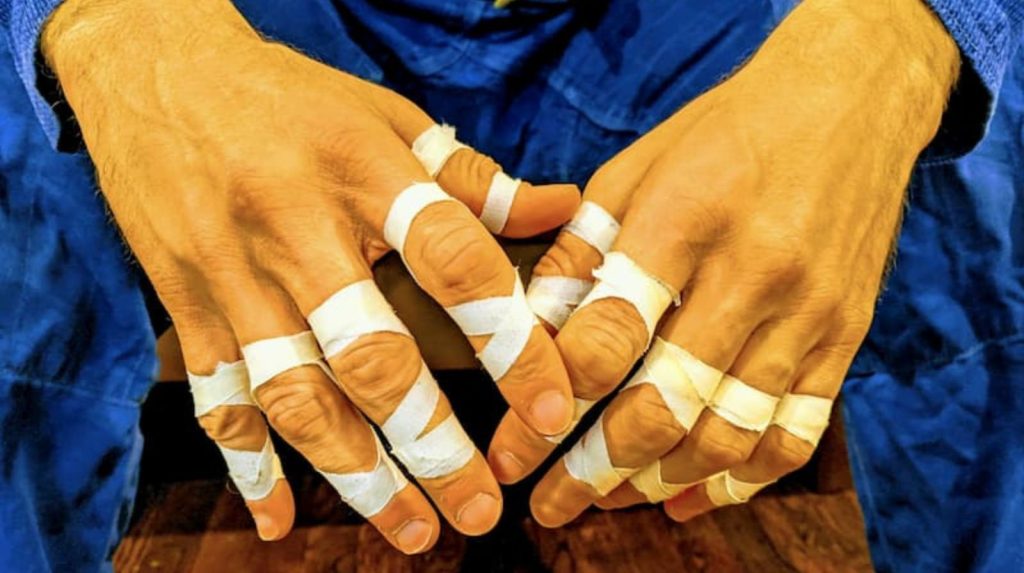
Shower before class if you can. Always shower after. Wash your gi and rashguard regularly—after every class is ideal if possible. Trim your nails short before rolling (even a small nick can cause problems in a close-contact sport). Don’t wear jewelry while training. Use a towel to dry off before getting on the mat.
If you’ve got any kind of skin infection—ringworm, staph, athlete’s foot, anything—don’t come to class. We know jiu-jitsu is addicting and missing class hurts, but training with a skin infection is how it spreads through your entire gym. Wait until you’re fully cleared by a doctor, then come back. Your gym family will understand.
Rolling Is Practice, Not War
There’s a difference between drilling, light rolling, and competition rolling. As a white belt, most of your time should be spent at light to medium intensity. You’re learning, not trying to win.
When you roll, pick a specific goal. Maybe you’re just working on not getting submitted. Maybe you’re drilling a specific guard pass you learned that day. Maybe you’re practicing staying calm when you’re on your back. Roll with intention, but not aggression.
What’s not okay: cranking on submissions like someone stole your lunch money. Slamming people. Going 100% intensity for 6 rounds straight. That’s how people get hurt, and that’s not the culture. Save the competition-level intensity for tournaments (which you shouldn’t do for several months anyway). For now, focus on technique and learning. Leave your ego in the locker room.
Choose Your Training Partners Wisely
Training with someone your own size and skill level is just smart. If you’re rolling with someone significantly stronger or more experienced, it’s hard to actually apply technique—they’re just going to overwhelm you. If you’re rolling with someone much weaker or less skilled, they can’t give you proper resistance, and you won’t learn as much.
As a white belt, stick with other white belts and maybe some blue belts who don’t mind helping you learn. As you progress and get tougher, you can handle rolling with higher belts, and eventually you’ll want to roll with varied skill levels to prepare for competition. But at the beginning, find training partners at your level.
Tap Early and Tap Often—It’s Not Weakness
This might be the most important rule for beginners: tapping out is not admitting defeat. It’s not shame. It’s intelligence.
When you’re just starting, your goal should be to survive and learn, not to never get submitted. If you feel a submission tightening and you can’t escape it, tap. Tap early before it gets tight. Tap on the mat, tap your partner’s leg, or just tap verbally. Your partner will immediately release.
Everyone taps—even black belts. Even world champions. Tapping isn’t losing; it’s the safety mechanism that keeps you healthy enough to train again tomorrow. If you refuse to tap and get injured, you might be out for weeks. If you tap, you’re training again in 48 hours. Choose wisely.
Don’t Compare Your Beginning to Someone Else’s Middle
You’ll walk into that gym and see people doing moves that look impossible. You’ll roll with people who submit you in 20 seconds. You’ll watch a blue belt move like they’re made of water. Your brain will immediately want to compare: “Why can’t I do that yet? Why am I so bad?”
Stop. Everyone in that gym started exactly where you are. The black belt teaching class was once a white belt who got submitted constantly. The person who makes jiu-jitsu look easy has probably been training for 5+ years. You’re comparing your first chapter to their middle chapters.
Focus on your own progress. Keep a training journal if it helps—write down what you learned, what worked, what didn’t. Compare yourself to who you were three months ago, not to the advanced student next to you. Everyone’s timeline is different, and that’s okay. The only person you need to be better than is the version of yourself from yesterday.
Don’t Buy Expensive Gear Yet
I know the temptation. You see someone with a fancy, expensive gi or state-of-the-art rash guard, and you want to match that energy. Don’t.
You don’t know yet if jiu-jitsu is going to stick. You don’t know if you’ll keep training after month two. Lots of people try jiu-jitsu for a few months and move on—no shame in that. But it means spending $300 on premium gear you might not use is wasteful.
Start with basic, affordable gear. Train in it. Get familiar with jiu-jitsu. Prove to yourself that this is something you’re committed to. Once you’re confident you’re in this for the long haul, upgrade to better quality stuff. Your future self will thank you for not wasting money, and by then you’ll actually know what gear works best for your style.
Stop Obsessing Over Belt Promotion
Your coach isn’t going to promote you to blue belt because you asked nicely. They’re going to promote you when your skill and understanding reach that level. Asking about promotion before you’ve been training seriously for at least a year? You’re not ready.
The journey matters way more than the destination. Your job right now isn’t to get your blue belt—it’s to show up consistently, learn fundamentals, develop a training mindset, and actually enjoy the process. Focus on that, and the promotions will come naturally.
Think about it differently: you’re going to spend months on your current belt. You might as well enjoy it instead of constantly looking ahead to the next one.
Train at Home Too (If You Can)
You don’t have to become obsessed with training 7 days a week, but spending time at home working on techniques between classes accelerates your progress. Even 15 minutes a few times a week helps.
Invest in a basic mat and a grappling dummy if you have the space. Work on movement drills—shrimping, bridging, technical stand-ups. Watch instructional videos. Review the techniques your coach taught that day. This supplemental work is how people advance faster, and it’s how you build jiu-jitsu intuition between classes.
Actually Enjoy the Process
Here’s the thing everyone forgets to mention: jiu-jitsu is supposed to be fun. Yeah, it’s hard. Yeah, you’ll get frustrated. But you’re learning something amazing, you’re building friendships, you’re challenging yourself in ways that make you stronger mentally and physically.
Don’t treat every class like you’re fighting for your life. Don’t obsess over whether you “won” your rolls. Don’t dread coming to the gym. If you’re genuinely miserable, something’s wrong—either with your gym, your expectations, or your approach.
The white belt phase is actually special. You’re new enough that everything is still fresh and exciting. You still have that beginner’s mind. Enjoy it. Because one day you’ll look back and miss the days when everything was new.
Final Thoughts: Your Journey Starts Now
These rules and expectations aren’t meant to intimidate you. They’re meant to help you fit in, stay safe, and actually enjoy your jiu-jitsu journey. Follow them, respect your community, and approach your training with humility and consistency.
The beautiful thing about jiu-jitsu is that every black belt in the world started exactly where you are. They got tapped. They felt confused. They questioned if they could do this. And they kept showing up. You can too.
So step on that mat, bow with respect, and remember: you’re not here to be perfect. You’re here to learn, to challenge yourself, and to become part of a community. Everything else follows naturally from that.
Start Your BJJ Journey Today
Now that you understand the culture, etiquette, and expectations of white belt jiu-jitsu, you’re ready to step on the mat with confidence. Find a quality gym, show up with respect, and embrace the process.
Remember: every instructor and black belt you’ll ever meet started exactly where you are right now. They’ve walked this path. You can too.
Find a BJJ Gym Near You