Best Fitness & Nutrition Program for BJJ Athletes Over 40
The complete guide to training smarter, recovering faster, and dominating on the mats. Science-backed meal plans, strength programs, hormone optimization, and injury prevention strategies for masters grapplers.
Training Brazilian Jiu-Jitsu after 40 presents unique challenges—but also incredible opportunities. While your body’s recovery capacity and hormone levels naturally decline with age, strategic nutrition and intelligent training programming can keep you competitive, injury-free, and improving for decades.
This comprehensive guide provides everything masters BJJ athletes need: specific macronutrient ratios, complete 14-day meal plans, strength training programs designed for over-40 bodies, evidence-based supplement protocols, hormone optimization strategies, and recovery techniques that actually work.
The Reality: BJJ practitioners over 40 who implement proper nutrition, structured strength training, and strategic recovery protocols report 33% fewer injuries, 20-40% improved performance metrics, and significantly longer training careers compared to those who don’t prioritize these fundamentals.
Why Masters BJJ Athletes Need Different Nutrition & Training
After age 30, testosterone levels begin declining at approximately 1% per year. By 40, this cumulative decrease significantly impacts muscle maintenance, recovery speed, joint health, and overall athletic performance. Additionally, metabolic rate decreases, inflammatory responses increase, and sleep quality often diminishes—all factors directly affecting your time on the mats.
Key Physiological Changes After 40
- Reduced Muscle Mass (Sarcopenia): Loss of 3-8% per decade after 30 without resistance training
- Decreased Recovery Capacity: Takes 48-72 hours vs 24-48 hours for younger athletes
- Hormonal Shifts: Lower testosterone, growth hormone, and IGF-1 levels
- Joint Wear: Increased inflammation, decreased lubrication, cartilage degradation
- Metabolic Slowdown: 2-3% decrease in basal metabolic rate per decade
- Slower Protein Synthesis: Requires higher protein intake to maintain muscle mass
The good news? All of these challenges can be significantly mitigated—and sometimes reversed—through proper nutrition, strategic supplementation, intelligent training programming, and optimized recovery protocols.
Complete Nutrition Guide for BJJ Athletes Over 40
Nutrition becomes even more critical after 40. Your body requires optimal fuel to support training intensity, facilitate recovery, maintain hormone levels, and prevent the muscle loss that naturally accompanies aging. The right nutrition strategy can be the difference between thriving on the mats or struggling through every session.
Optimal Macronutrient Ratios for Masters Grapplers
Research on combat athletes and aging physiology suggests the following macronutrient distribution for BJJ practitioners over 40:
Daily Macronutrient Targets
Protein: 1.6-2.2g per kg body weight (35-40% of total calories)
Why Higher Than Standard Recommendations: Aging bodies experience “anabolic resistance”—muscles become less responsive to protein synthesis signals. Higher protein intake compensates for this reduced efficiency.
- For 180lb (82kg) athlete: 130-180g protein daily
- For 200lb (91kg) athlete: 145-200g protein daily
- Distribution: 25-40g per meal across 4-5 meals for optimal synthesis
Carbohydrates: 3-7g per kg body weight (40-45% of total calories)
Training Day Focus: Carbohydrates fuel high-intensity BJJ sessions and replenish muscle glycogen stores. Timing matters more than total amount.
- Pre-Training: 0.25g/lb bodyweight 1-3 hours before (complex carbs)
- Post-Training: 0.5-1g/kg within 30-60 minutes (simple carbs acceptable)
- Rest Days: Lower end of range (3-4g/kg) to support recovery without excess
Healthy Fats: 0.8-1.2g per kg body weight (20-30% of total calories)
Hormone Support: Fats are precursors to testosterone and other hormones. Don’t go low-fat after 40.
- Focus: Omega-3 fatty acids, monounsaturated fats, limited saturated fats
- Sources: Fatty fish, avocados, olive oil, nuts, seeds
- Avoid: Trans fats and highly processed oils
14-Day Meal Plan for BJJ Athletes Over 40
This meal plan provides approximately 2,400-2,800 calories daily with optimal macronutrient distribution for a 180lb masters athlete training 3-4 times per week. Adjust portions based on your specific weight, training frequency, and goals.
| Day/Meal | Breakfast | Lunch | Dinner | Snacks |
|---|---|---|---|---|
| Day 1 | Oats with banana, strawberries, skim milk, honey (60g carbs, 20g protein) | Grilled chicken breast, quinoa, spinach, bell peppers, olive oil dressing (65g carbs, 45g protein) | Baked salmon, roasted sweet potatoes, steamed broccoli (70g carbs, 50g protein) | Greek yogurt with blueberries, chia seeds (25g carbs, 20g protein) |
| Day 2 | Whole wheat toast, smashed avocado, 3 poached eggs (40g carbs, 25g protein) | Beef sirloin steak, kale and carrot stir-fry, brown rice (60g carbs, 50g protein) | Pan-seared salmon, quinoa, steamed spinach (55g carbs, 45g protein) | Cottage cheese, apple slices, walnuts (30g carbs, 25g protein) |
| Day 3 (Training Day) | Greek yogurt, strawberries, granola, almonds (50g carbs, 30g protein) | Chicken salad with spinach, avocado, bell peppers, olive oil (45g carbs, 40g protein) | Beef sirloin, quinoa, roasted zucchini (75g carbs, 55g protein) | Protein shake (30g protein), banana (25g carbs) |
| Day 4 | Oatmeal with blueberries, chia seeds, honey (55g carbs, 15g protein) | Grilled salmon, sweet potato mash, sautéed spinach (70g carbs, 45g protein) | Stir-fried chicken, broccoli, carrots, brown rice (65g carbs, 50g protein) | Handful of almonds and walnuts (5g carbs, 10g protein) |
| Day 5 (Training Day) | Cottage cheese pancakes, banana, honey (45g carbs, 30g protein) | Beef and avocado salad, tomatoes, carrots, bell peppers (40g carbs, 45g protein) | Baked chicken breast, quinoa, steamed kale (80g carbs, 55g protein) | Greek yogurt, strawberries, almonds (30g carbs, 25g protein) |
| Day 6 | Scrambled eggs (4), spinach, whole wheat toast (35g carbs, 30g protein) | Grilled salmon, brown rice, steamed broccoli (65g carbs, 45g protein) | Beef stir-fry, bell peppers, zucchini, quinoa (60g carbs, 50g protein) | Apple slices, natural peanut butter (25g carbs, 10g protein) |
| Day 7 (Training Day) | Oatmeal, apple slices, walnuts, honey (60g carbs, 15g protein) | Grilled chicken, kale salad, avocado, olive oil (35g carbs, 45g protein) | Baked salmon, sweet potatoes, sautéed carrots (85g carbs, 50g protein) | Cottage cheese, blueberries (20g carbs, 25g protein) |
Training Day Adjustments: On BJJ training days, increase carbohydrate intake by 15-20% primarily around training windows. Consume 0.25g/lb bodyweight carbs 1-3 hours pre-training and 0.5-1g/kg post-training with 20-30g protein for optimal recovery.
Meal Timing Strategy for BJJ Performance
🍽️ Pre-Training Meal (1-3 Hours Before)
Focus: Moderate protein (25-40g), higher carbs (~0.25g/lb), low fat and fiber
Examples: Chicken + rice, lean beef + potatoes, turkey sandwich, Greek yogurt + oatmeal, protein shake + banana
Goal: Provide sustained energy without digestive discomfort
🥤 During Training (Sessions Over 90 Minutes)
Hydration: 15-20oz water per hour with 250-1000mg sodium
Optional Carbs: 25-45g per hour (fruit, applesauce, sports drinks)
Optional Protein: 10-15g per hour if training exceeds 90 minutes
💪 Post-Training Meal (Within 30-60 Minutes)
Focus: High protein (30-50g), moderate-high carbs (0.5-1g/kg), moderate fat acceptable
Examples: Protein shake + banana, chicken + rice + veggies, salmon + sweet potato, eggs + toast + fruit
Goal: Kickstart muscle protein synthesis and replenish glycogen stores
Anti-Inflammatory Foods for Joint Health
After 40, joint health becomes paramount. Chronic inflammation accelerates aging and increases injury risk. Prioritize these anti-inflammatory foods:
Top Anti-Inflammatory Foods for Grapplers
- Fatty Fish: Salmon, mackerel, sardines (3x per week minimum) – Rich in omega-3 EPA/DHA
- Turmeric/Curcumin: Add to meals or supplement (500-2000mg daily) – Reduces muscle soreness 40-50%
- Ginger: Fresh ginger tea, cooking ingredient – Supports cortisol regulation
- Berries: Blueberries, strawberries, blackberries – Packed with antioxidants
- Green Tea: 2-3 cups daily – Contains catechins for stress management
- Leafy Greens: Spinach, kale, arugula – High in vitamins K, C, and minerals
- Nuts and Seeds: Walnuts, almonds, chia, flax – Omega-3 ALA and micronutrients
- Olive Oil: Extra virgin, cold-pressed – Oleocanthal has anti-inflammatory properties
- Avocados: Daily consumption – Healthy fats support hormone production
- Dark Chocolate: 70%+ cacao (in moderation) – Flavonoids reduce inflammation
Foods to Limit or Avoid
Certain foods promote inflammation, disrupt hormone balance, or impair recovery. Minimize these for optimal performance over 40:
- Refined Sugars: Candy, soda, sweetened beverages – Spike insulin, promote fat storage
- Processed Meats: Hot dogs, deli meat, bacon – High sodium and preservatives increase inflammation
- Trans Fats: Fried foods, margarine, processed baked goods – Directly harm cardiovascular health
- Excessive Alcohol: More than 2 drinks daily – Disrupts sleep, lowers testosterone, impairs recovery
- High-Sodium Processed Foods: Packaged meals, chips, frozen dinners – Water retention and inflammation
- Vegetable/Seed Oils: Corn, soybean, cottonseed oil – High omega-6 promotes inflammation
Strength & Conditioning Program for BJJ Athletes Over 40
While BJJ itself is not a strength and conditioning program, adding 2-3 structured S&C sessions per week provides massive benefits for masters athletes: 33% injury reduction, 20-40% improved performance metrics, enhanced grip endurance, and dramatically better longevity on the mats.
Critical Principle: Over 40, your body cannot handle the same training volume as younger athletes. The key is training SMARTER, not harder. Quality over quantity. Strategic programming over grinding. Recovery over heroic efforts.
Training Frequency and Volume Guidelines
Weekly Training Structure for Masters BJJ Athletes
Total Weekly Volume
- BJJ Training: 3-4 sessions per week (total 4-6 hours)
- Strength Training: 2-3 sessions per week (45-60 minutes each)
- Mobility/Recovery: Daily (10-15 minutes minimum)
- Rest Days: 1-2 complete rest days per week (non-negotiable)
Sample Weekly Schedule
- Monday: Strength Training (Heavy) + Mobility
- Tuesday: BJJ Training (Technical) + Mobility
- Wednesday: Strength Training (Moderate) + Mobility
- Thursday: BJJ Training (Light Rolling) + Mobility
- Friday: Strength Training (Light) OR Active Recovery
- Saturday: BJJ Training (Competition Rounds)
- Sunday: Complete Rest OR Gentle Yoga/Stretching
Essential Strength Exercises for BJJ Over 40
Focus on compound movements that build functional strength directly applicable to grappling while minimizing joint stress and injury risk.
Lower Body Exercises
1. Goblet Squats (or Kettlebell Squats)
BJJ Benefits: Hip mobility, base strength, guard retention power
Programming: 3 sets x 8-12 reps, 2x per week
Why Over Barbell: Less spinal loading, easier on lower back, improves squat depth
2. Romanian Deadlifts (RDLs)
BJJ Benefits: Posterior chain development, grip strength, takedown defense
Programming: 3 sets x 8-10 reps, 2x per week
Form Focus: Hinge at hips, maintain neutral spine, feel hamstring stretch
3. Bosu Ball Squats (Stability Work)
BJJ Benefits: Joint stability, balance, ligament protection
Programming: 2 sets x 12-15 reps, 1-2x per week
Progression: Bodyweight → Light dumbbells → Moderate weight
4. Hip Thrusts
BJJ Benefits: Bridging power, escapes, takedown explosiveness
Programming: 3 sets x 10-15 reps, 2x per week
Setup: Upper back on bench, barbell across hips, drive through heels
Upper Body Exercises
1. Pull-Ups or Assisted Pull-Ups
BJJ Benefits: Grip endurance, guard pulls, back control strength
Programming: 3 sets x max reps (or 8-12 with assistance), 2x per week
Variations: Neutral grip, wide grip, chin-ups for variety
2. Bent-Over Rows (Barbell or Dumbbell)
BJJ Benefits: Pulling strength, grip development, back thickness
Programming: 3 sets x 8-12 reps, 2x per week
Form: Hip hinge, flat back, pull to lower sternum
3. Bosu Ball Push-Ups
BJJ Benefits: Core stability, functional upper body strength, wrist/shoulder health
Programming: 2-3 sets x max reps, 2x per week
Regression: Start on knees if needed, progress to toes
4. Overhead Press (Dumbbell or Barbell)
BJJ Benefits: Frames, posting, pushing power
Programming: 3 sets x 8-10 reps, 1-2x per week
Safety: Seated variation reduces lower back stress
Core and Grip Exercises
1. Planks (Front and Side)
Programming: 3 sets x 30-60 seconds, 2-3x per week
Progression: Increase time → Add weight to back → Single-leg variations
2. Dead Hangs (Grip Training)
Programming: 3 sets x max time, 2-3x per week after upper body work
Goal: Work up to 60+ second hangs for competition-level grip endurance
3. Farmer’s Carries
Programming: 3 sets x 40-60 yards, 1-2x per week
Weight: Heavy enough to challenge grip (50-75% bodyweight per hand)
4. Kettlebell Swings
Programming: 3 sets x 15-20 reps, 1-2x per week
Benefits: Hip explosiveness, cardiovascular conditioning, posterior chain
Sample 12-Week Strength Program
| Phase | Weeks | Focus | Sets x Reps | Intensity |
|---|---|---|---|---|
| Anatomical Adaptation | 1-3 | Build work capacity, perfect form, prep joints | 2-3 x 12-15 | 60-70% 1RM |
| Hypertrophy | 4-6 | Build muscle mass, increase volume | 3-4 x 8-12 | 70-80% 1RM |
| Strength | 7-9 | Build maximal strength, lower volume | 4-5 x 4-6 | 80-90% 1RM |
| Power/Maintenance | 10-12 | Explosive movements, competition prep | 3-4 x 3-5 | 70-85% 1RM |
Periodization for Masters Athletes: The 12-week cycle allows proper progression without overtraining. After completion, take a deload week (50% volume/intensity), then repeat the cycle with slightly higher baseline weights. This sustainable approach prevents burnout and injury.
Mobility and Flexibility Work
Daily mobility work is non-negotiable for BJJ athletes over 40. Just 10-15 minutes prevents injuries and dramatically improves your grappling range of motion.
🧘 Daily Mobility Routine (15 Minutes)
- Cat-Cow Stretches: 10 reps – Spinal mobility
- Hip Circles: 10 each direction per leg – Hip joint health
- World’s Greatest Stretch: 5 reps per side – Full-body mobility
- Shoulder Dislocations (band): 15 reps – Shoulder mobility
- Deep Squat Hold: 60 seconds – Hip and ankle mobility
- Pigeon Pose: 60 seconds per side – Hip flexibility
- Child’s Pose: 60 seconds – Back and shoulder stretch
- Hamstring Stretch: 30 seconds per leg – Posterior chain flexibility
Common Training Mistakes to Avoid Over 40
- Training Like You’re 22: Your recovery capacity has decreased—accept this and train smarter
- Neglecting Warm-Ups: Cold muscles tear easily. Always warm up 10-15 minutes minimum
- Ignoring Pain Signals: Pain is your body’s warning system. Address issues immediately
- Overtraining: More volume doesn’t equal better results after 40. Quality beats quantity
- Skipping Strength Training: BJJ alone won’t maintain muscle mass or bone density
- Poor Training Partner Selection: Avoid overly aggressive partners who increase injury risk
- Inadequate Recovery: Sleep, nutrition, and rest days are part of training, not interruptions to it
Evidence-Based Supplements for BJJ Athletes Over 40
While supplements can never replace proper nutrition and training, specific supplements provide measurable benefits for masters athletes—particularly for recovery, hormone support, joint health, and performance enhancement.
Important Disclaimer: Always consult with a qualified physician before starting any supplement regimen, especially if you have pre-existing conditions or take medications. These recommendations are based on research for healthy adults over 40.
Essential Supplements (Priority Tier)
1. Creatine Monohydrate
Most Researched Supplement $15-20/monthDosage: 5g daily (no loading phase needed for BJJ)
Timing: Any time of day, with or without food
Benefits for BJJ Over 40:
- Increased strength and power output (5-15% improvement)
- Enhanced muscle hypertrophy (helps offset sarcopenia)
- Improved muscle recovery between training sessions
- Resistance to fatigue during high-intensity rolling
- Cognitive benefits (improved focus, memory, neuroprotection)
Research: Creatine is the most well-studied and proven supplement for athletic performance. Over 500 studies confirm its safety and efficacy, particularly for combat athletes.
2. Vitamin D3
Hormone Support $10-15/monthDosage: 3,000-5,000 IU daily with food containing fat
Testing: Get blood levels checked (optimal: 50-80 ng/mL)
Benefits for BJJ Over 40:
- Testosterone production support (25% increase with deficiency correction)
- Bone density maintenance (crucial for impact sports)
- Immune system function (reduces illness frequency)
- Muscle strength and power development
- Mood and mental well-being (depression management)
Why Critical Over 40: Vitamin D deficiency is extremely common in adults over 40 (50%+ deficient). Supplementation reliably corrects this, with direct benefits to hormone levels and athletic performance.
3. Omega-3 Fish Oil (EPA/DHA)
Joint Health $20-30/monthDosage: 2-3g combined EPA/DHA daily (check label for actual EPA/DHA content)
For Joint Issues: Up to 9g daily shows therapeutic benefits
Quality Matters: Choose mercury-tested, molecularly distilled brands
Benefits for BJJ Over 40:
- Reduced joint inflammation and pain (40-50% improvement studies show)
- Improved cardiovascular health
- Brain function and cognitive health
- Enhanced recovery from training
- Mood stabilization and reduced anxiety
Research Note: The anti-inflammatory benefits of omega-3s are dose-dependent. Higher doses (3-9g) show greater joint health benefits critical for grapplers.
4. Protein Powder (Whey or Plant-Based)
Convenience $30-50/monthDosage: 25-40g per serving, 1-2 servings daily as needed
Timing: Post-training (within 60 minutes) and/or between meals
Type: Whey isolate (fastest absorption) or plant blend (if dairy-sensitive)
Benefits for BJJ Over 40:
- Convenient way to hit 1.6-2.2g/kg daily protein target
- Rapid muscle protein synthesis post-training
- Helps prevent muscle loss (sarcopenia)
- Easy to digest and absorb
Not Essential If: You consistently hit protein targets through whole foods. Protein powder is a convenience tool, not magic.
Performance Enhancement Supplements (Secondary Tier)
5. Magnesium
Sleep & Recovery $15-20/monthDosage: 300-500mg before bed (magnesium glycinate or L-threonate preferred)
Avoid: Magnesium oxide (poor absorption, digestive issues)
Benefits: Improved sleep quality, reduced muscle cramps, better recovery, decreased anxiety, supports 600+ bodily reactions
Special Note: 50% of US adults get insufficient magnesium. Supplementation dramatically improves sleep quality, which is critical for recovery over 40.
6. Zinc
Immune & Testosterone $10-15/monthDosage: 30-50mg daily with food
Form: Zinc picolinate or citrate (better absorption)
Benefits: Improved immune function (50% fewer illnesses), faster wound healing, decreased inflammation, potential testosterone support, strength gains
7. Collagen Type I & III
Joint & Tendon Health $25-35/monthDosage: 10-15g daily
Timing: Post-training or before bed
Benefits: Joint pain reduction, tendon/ligament support, skin health, bone density maintenance
Why Important Over 40: Natural collagen production decreases with age. Supplementation helps maintain joint integrity under grappling stress.
8. Curcumin (Turmeric Extract)
Anti-Inflammatory $20-30/monthDosage: 500-2000mg daily (look for products with black pepper extract/piperine for absorption)
Benefits: 40-50% reduction in muscle soreness, decreased inflammation, improved recovery, joint pain relief
Sleep Stack for Enhanced Recovery
Sleep quality naturally declines after 40, yet it’s the most critical recovery tool available. This supplement stack (recommended by sleep researcher Dr. Andrew Huberman) dramatically improves sleep quality:
💤 Sleep Optimization Stack
- Magnesium L-Threonate: 300-400mg (30 min before bed)
- Apigenin: 50mg (from chamomile extract)
- L-Theanine: 100-200mg
- Optional: Glycine: 2-3g
Result: Deeper sleep, fewer middle-of-night awakenings, faster sleep onset, enhanced recovery. Many users report being able to train 4x BJJ + 4x strength weekly with this sleep protocol.
Supplements to Consider Avoiding
- Testosterone Boosters: Most are ineffective; those that work have concerning side effects. Address natural T optimization first
- Fat Burners: Often contain excessive caffeine and untested compounds. Focus on diet instead
- Branch Chain Amino Acids (BCAAs): Unnecessary if hitting protein targets. Save your money
- Pre-Workouts (excessive stimulants): Can disrupt sleep and increase cortisol. Caffeine alone is better
- Proprietary Blends: You don’t know what or how much you’re getting. Avoid undisclosed formulations
Natural Hormone Optimization Strategies
While testosterone naturally declines 1% per year after 30, lifestyle modifications can significantly boost levels naturally—often more effectively and safely than supplementation.
Evidence-Based Testosterone Boosting Methods
1. Optimize Sleep (Biggest Impact)
- Get 8+ hours nightly (testosterone peaks during sleep)
- Maintain consistent sleep schedule (even weekends)
- Dark, cool bedroom (65-68°F optimal)
- Limit blue light 2 hours pre-bed
- Impact: Poor sleep (5 hours) reduces T levels by 10-15%
2. Strength Training (2-3x Weekly)
- Compound lifts (squats, deadlifts, presses) most effective
- Moderate-heavy loads (70-85% 1RM)
- Adequate rest between sets (2-3 minutes)
- Impact: Acute 15-40% T increase post-workout; long-term baseline improvements
3. Maintain Healthy Body Fat (15-20%)
- Obesity significantly lowers testosterone
- Very low body fat (<10%) also problematic
- 15-20% body fat range optimal for hormone production
- Impact: Each 10kg fat loss can increase T by 3-4 nmol/L
4. Stress Management
- Chronic stress elevates cortisol, which suppresses testosterone
- Practice meditation, deep breathing, or yoga daily
- Limit overtraining (BJJ 3-4x + S&C 2-3x is plenty)
- Take deload weeks every 4-6 weeks
- Impact: Reducing chronic stress can increase T by 10-20%
5. Vitamin D Optimization
- 15-30 minutes morning sunlight (face, arms, legs exposed)
- Supplement 3,000-5,000 IU daily if insufficient sun exposure
- Test blood levels (target 50-80 ng/mL)
- Impact: Correcting deficiency increases T by up to 25%
6. Limit Alcohol
- More than 2 drinks daily significantly lowers testosterone
- Alcohol impairs sleep quality (even if you fall asleep faster)
- Consider limiting to 1-2x per week if optimizing performance
- Impact: Heavy drinking can reduce T by 20-30%
Recovery Protocols Beyond Supplements
🔄 Complete Recovery Checklist
- Sleep: 8+ hours nightly, consistent schedule
- Hydration: 0.5-1 oz per pound bodyweight daily
- Nutrition: Hit protein targets (1.6-2.2g/kg), anti-inflammatory foods
- Active Recovery: Light cardio, yoga, swimming on off-days
- Mobility: 10-15 minutes daily stretching/mobility work
- Massage/Bodywork: Professional massage 1-2x monthly
- Ice Baths/Contrast Therapy: Optional but beneficial for inflammation
- Deload Weeks: Reduce volume/intensity by 50% every 4-6 weeks
Injury Prevention for Masters BJJ Athletes
After 40, injury prevention becomes paramount. A single major injury can sideline you for months—or permanently. The good news? Research shows that proper strength and conditioning programs reduce BJJ injuries by 33%, and intelligent training strategies can keep you rolling injury-free for decades.
Most Common BJJ Injuries Over 40
- Joint Issues: Knee injuries (meniscus, ACL), shoulder issues (rotator cuff), elbow hyperextension
- Neck/Spine: Cervical strain, disc issues, lower back pain
- Fingers/Hands: Finger joint damage, grip strain, wrist injuries
- Ribs: Rib cartilage injuries, intercostal strains
- Soft Tissue: Muscle strains, tendinitis, bursitis
Training Smart: Injury Prevention Strategies
Golden Rules for BJJ Over 40
1. Choose Training Partners Wisely
The #1 factor in injury prevention is training partner selection. Avoid overly aggressive partners who prioritize “winning” over learning. Seek partners who:
- Respect tap signals immediately
- Match your intensity level
- Focus on technique over strength
- Have good body control
2. Tap Early, Tap Often
Your ego is not worth a torn ligament or months off the mats. When caught in a submission:
- Tap before pain reaches problematic levels
- Don’t try to “tough out” joint locks
- Remember: you can’t train if you’re injured
- Save heroic escapes for competition (if you compete)
3. Never Skip Warm-Ups
Cold muscles and tendons tear much more easily. Minimum 10-15 minute warm-up including:
- Light cardio (jump rope, jogging, shadowboxing)
- Dynamic stretching (leg swings, arm circles, torso twists)
- Movement drills (shrimping, technical standup, bridging)
- Gradually increasing intensity (no hard rolling immediately)
4. Focus on Defense First
The philosophy “survive first, then win” protects your body:
- Master defensive positioning before offensive techniques
- Use leverage and technique over strength and speed
- Accept inferior positions temporarily to avoid strain
- Build a defensive foundation that allows relaxed rolling
5. Listen to Your Body
Pain is your body’s warning system. Learn to distinguish:
- Good Pain: Muscle fatigue, lactic acid burn, mild soreness
- Bad Pain: Sharp pain, joint pain, pain that doesn’t improve with rest
- Action: Address bad pain immediately (ice, rest, see medical professional)
- Remember: Training through injury worsens it exponentially
6. Schedule Rest Days (Non-Negotiable)
After 40, your body needs more recovery time:
- Minimum 1-2 complete rest days per week
- Active recovery acceptable (walking, yoga, light stretching)
- Rest days are when adaptation occurs, not interruptions
- If feeling overly fatigued, take an extra day off
Prehab Exercises for Common Problem Areas
🦵 Knee Health Exercises
- Terminal Knee Extensions: 3 sets x 15 reps daily (with resistance band)
- Single-Leg Balance: 30 seconds per leg, 2x daily
- VMO Activation: Isometric leg extensions at various angles
- Hamstring Curls: 2 sets x 12-15 reps, 2x weekly
💪 Shoulder Health Exercises
- Band Pull-Aparts: 3 sets x 15-20 reps daily
- External Rotations: 3 sets x 12 reps per arm, 3x weekly
- Face Pulls: 3 sets x 15 reps, 2x weekly
- YTWs: 2 sets x 10 each position, 2x weekly
🖐️ Grip and Finger Health
- Finger Extensor Work: Rubber band extensions, 3 sets x 20 reps daily
- Wrist Circles: 10 each direction, multiple times daily
- Grip Squeezes: Light grip ball squeezes throughout day
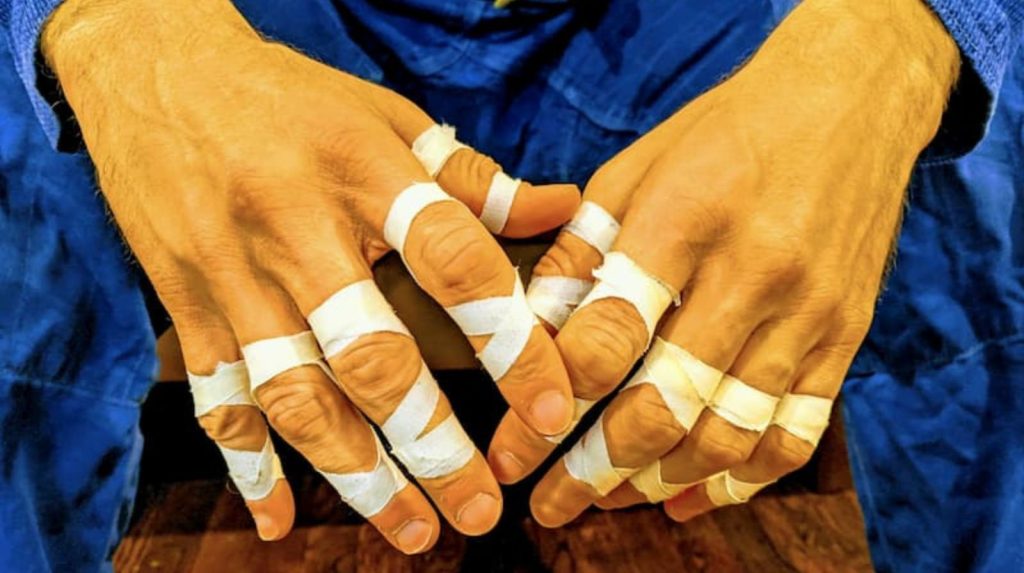
- Tape Fingers Preventatively: Before training if feeling strain
When to See a Medical Professional
Don’t delay professional evaluation for these symptoms:
- Sharp pain that doesn’t improve within 48 hours
- Swelling that persists or worsens
- Limited range of motion in any joint
- Pain that prevents normal daily activities
- Any “pop” or “tear” sensation during training
- Numbness or tingling (especially neck/spine issues)
Early intervention prevents minor issues from becoming major problems. A $150 physical therapy visit beats 6 months off the mats.
Conclusion: Your Blueprint for BJJ Longevity Over 40
Training Brazilian Jiu-Jitsu after 40 is not only possible—it can be the most rewarding physical activity of your life. The key is accepting that your approach must differ from younger athletes and embracing strategies that prioritize longevity over short-term heroics.
This comprehensive guide has provided everything you need: optimal nutrition with specific macronutrient ratios and meal plans, structured strength training programs designed for masters athletes, evidence-based supplement protocols, hormone optimization strategies, and injury prevention techniques proven to work.
Your Action Plan: Getting Started
📋 Week 1-2: Foundation
- Calculate your protein needs (1.6-2.2g/kg bodyweight)
- Begin tracking daily protein intake
- Start daily mobility routine (10-15 minutes)
- Assess current training volume (likely need to reduce)
- Order essential supplements (creatine, Vitamin D, Omega-3)
📋 Week 3-4: Implementation
- Begin following 14-day meal plan structure
- Add 2x weekly strength training sessions
- Implement sleep optimization protocol
- Schedule 1-2 complete rest days per week
- Start supplement regimen consistently
📋 Week 5-12: Optimization
- Fine-tune meal timing around training
- Progress strength training weights/reps
- Add prehab exercises for problem areas
- Consider blood work (testosterone, Vitamin D levels)
- Evaluate and adjust based on recovery quality
The Long Game: Sustainable BJJ for Decades
The practitioners who thrive in BJJ after 40 share common characteristics:
- They Train Consistently, Not Intensely: 3-4x per week for years beats 7x per week for months
- They Prioritize Recovery: Sleep, nutrition, rest days are sacred
- They Focus on Technique: Relying on knowledge and timing, not athleticism
- They Strength Train: 2-3x weekly off the mats builds resilience
- They Listen to Their Bodies: Pain signals are respected, not ignored
- They Optimize Hormones: Sleep, diet, supplements, stress management
- They Choose Partners Wisely: Training environment matters more than you think
Remember This: Brazilian Jiu-Jitsu is a lifelong journey, not a sprint. The goal isn’t to train like you’re 25—it’s to train so intelligently that you’re still rolling at 50, 60, and beyond. Many of the best technical practitioners are in their 50s and 60s precisely because they learned to train smart rather than hard.
Your body may not recover like it used to, but with the strategies in this guide, you can perform better than many younger athletes who ignore fundamentals. Proper nutrition, structured strength training, evidence-based supplementation, and intelligent recovery protocols create a masters BJJ athlete who is stronger, more resilient, and more injury-resistant than the average practitioner.
The mats are waiting. Train smart, recover well, and enjoy decades of growth in this beautiful martial art.
OSS!